Modernizing Heating Systems in East Tremont Properties
When an aging heating system suffers chronic section leaks, persistent cracked cast-iron blocks, or declining efficiency, professional boiler replacement East Tremont Bronx property owners invest in provides lasting reliability. Heating an older brick row house near Tremont Avenue or a four-family apartment building off Crotona Park requires much more than simply matching the BTU input label on an old boiler that was installed thirty years ago.
Many existing boilers in the Bronx were oversized when original coal or oil furnaces were converted. Installing an identical oversized replacement causes rapid fuel cycling, excessive chimney heat loss, and thermal stress. Conversely, selecting equipment based solely on unit pricing without engineering calculations leaves top-floor radiators freezing in sub-zero weather.
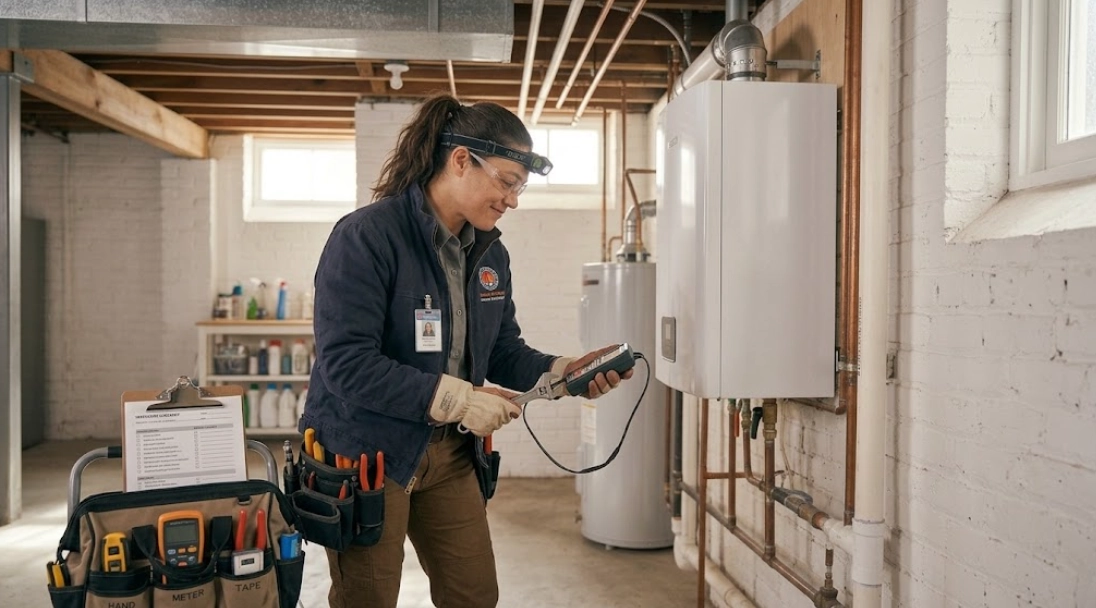
Critical Engineering Factors for New Boiler Installation
A successful new boiler installation East Tremont Bronx homeowners depend on requires addressing several critical building systems:
- Steam vs. Hydronic Load Matching: Steam boilers must be sized according to the cumulative square footage of connected equivalent direct radiation (EDR). Hot-water systems require heat-loss calculations based on building envelope, insulation, window exposure, and distribution pipe capacity.
- Steam Header and Drop-Header Design: Proper steam piping geometry separates moisture from rising steam. Inadequate header height causes water carryover, surging gauge glasses, and violent water hammer across residential radiators.
- Venting and Masonry Chimney Flue Liners: Modern boilers exhaust flue gases at different temperatures than legacy atmospheric units. Aging clay chimney flues must be inspected for crumbling tile liners, and stainless steel chimney liners are installed where necessary.
- Combustion Air Supply: Tightly sealed basements without dedicated fresh air intakes can starve atmospheric burners of combustion oxygen, leading to dangerous backdrafting and soot accumulation.
Fuel Conversions & NYC Regulatory Code Compliance
Many building owners seek a boiler conversion East Tremont Bronx transition from legacy #2 fuel oil to clean, efficient natural gas. Fuel conversion involves several critical stages:
- Gas Supply Capacity Verification: Ensuring the building’s gas service meter and supply line diameter support the required peak BTU firing rate.
- NYC Department of Buildings (DOB) Permitting: Filing plumbing and mechanical permits, gas pressure tests, and chimney certifications to satisfy municipal building codes.
- Electrical and Control Upgrades: Installing modern digital aquastats, outdoor reset sensors, emergency thermal cutoff switches, and dual low-water safety devices.
If your current system suffers from minor leaks or isolated radiator issues, consult our detailed guides on boiler repair in East Tremont or steam heat and radiator repair before assuming a complete overhaul is necessary. If your domestic hot water is supplied through an internal tankless coil within your boiler, explore our water heater repair options for indirect storage solutions that reduce boiler strain.
Step-by-Step Installation Planning
Detailed Load Survey
We measure radiator dimensions (for steam) or building envelope heat loss (for hydronic) to establish true firing requirements.
Decommissioning & Removal
Safe disconnection of electrical feeds, fuel lines, flue pipes, and systematic extraction of the retired boiler vessel.
Piping Fabrication & Wiring
Custom prefabricated black iron steam headers or copper hydronic manifolds, backflow preventers, and digital safety controls.
Commissioning & Balancing
Draft testing, chemical skimming to remove machining oils, pressure relief calibration, and verifying heat balance across all building floors.
Frequently Asked Questions About Boiler Replacement
In steam heating systems, the boiler must produce sufficient steam to condense across every single radiator section in the building. Sizing a steam boiler by building square footage alone results in an undersized unit that short-cycles on low water or cannot push steam to top-floor radiators.
In New York City, boiler installations require Department of Buildings (DOB) work permits, chimney inspections, gas piping pressure tests, and compliance with NYC fuel and energy conservation codes.
Yes. A boiler conversion involves evaluating gas service capacity at the meter, assessing chimney flue lining compatibility, sizing the new gas train, and filing required utility and municipal filings.