Underground Sewer Diagnostics for Aging Bronx Properties
Underneath the streets and residential foundations of East Tremont runs an intricate network of underground wastewater piping. Many private sewer laterals were constructed using extra-heavy cast iron or vitrified clay tile during the early twentieth century. Over decades, ground shifting from heavy street traffic, nearby Cross Bronx Expressway construction, and invasive tree roots cause cracked joints and structural pipeline collapses. Professional sewer line repair East Tremont Bronx provides lasting structural remedies.
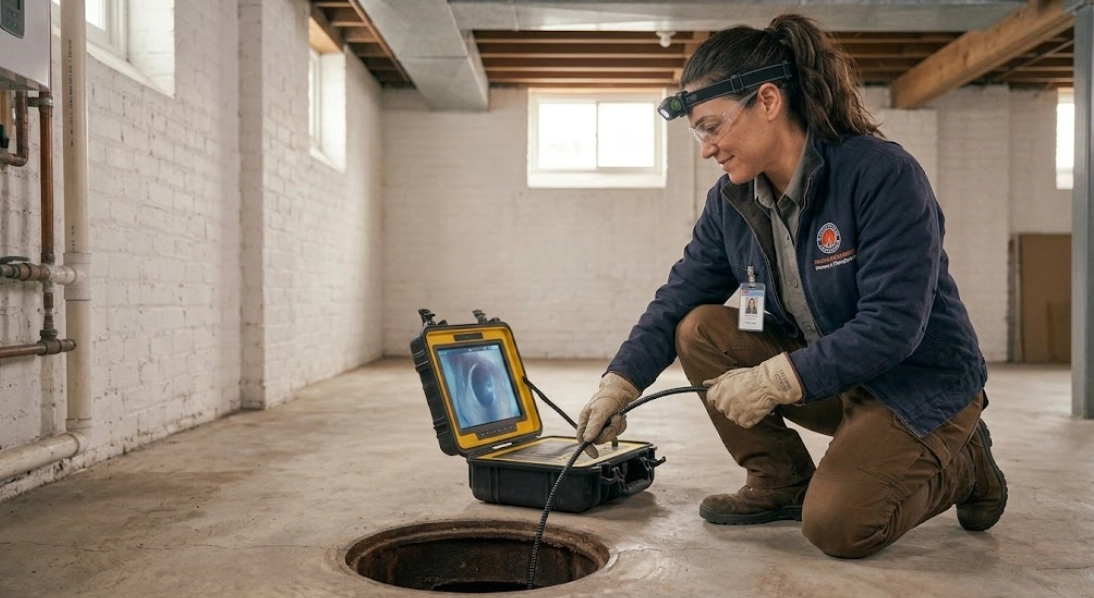
When wastewater backs up into basement floor drains or lower-level apartments, guessing at the cause leads to wasted time and repetitive plumbing fees. Conducting an immediate sewer camera inspection East Tremont Bronx pinpoints whether the disruption is caused by a dense root ball, settled belly holding standing water, or fractured clay pipe section before excavation begins.
Signs That Your Sewer Lateral Requires Repair
A compromised main sewer line exhibits distinct warning signs that differ from minor isolated sink clogs:
- Repeated Sewer Backups: Requiring emergency sewer backup repair East Tremont Bronx service every few weeks or months indicates physical structural pipe failure rather than simple soft blockages.
- Simultaneous Multi-Fixture Flooding: When running a dishwasher or bath causes waste to back up into basement utility sinks or ground-floor toilets, the main house sewer trap or exterior lateral is blocked.
- Foul Sewer Gas Infiltration: Damaged sewer pipes beneath basement slabs allow toxic sewer methane and sewer odors to enter living areas through floor cracks.
- Tree Root Intrusion: Mature neighborhood street trees seek moisture through microscopic gaps in aging clay pipe bell-and-spigot mortar, rapidly forming dense root masses that snag solids.
Private Sewer Responsibilities & NYC Infrastructure
Understanding property boundaries is critical when evaluating sewer line issues in New York City:
Understanding Sewer Ownership in NYC
In New York City, property owners are generally responsible for maintaining and repairing the entire private house sewer connection (lateral) extending from inside the foundation, beneath the sidewalk and street, right up to the connection spur at the municipal sewer main. Because responsibilities depend on specific circumstances, a camera inspection with sonde locating verifies whether the defect lies on private property or within city utility lines.
When a defect is located, repair options depend on depth, pavement conditions, and pipe deterioration:
- Targeted Spot Excavation: If a specific clay pipe joint has slipped or collapsed beneath a front yard or sidewalk, a localized trench repair replaces only the damaged section with modern schedule-40 PVC or cast iron.
- Complete Lateral Replacement: In cases where the entire line has lost grade, suffered multiple collapses, or deteriorated completely, full trenching from the foundation cleanout to the street main provides permanent infrastructure.
Coordinating With Building Plumbing & Heating Systems
A compromised sewer line endangers connected building infrastructure. When sewer backups flood cellars, water can submerge boiler burners, electrical gas controls, and low-water cutoffs. If your heating equipment has been exposed to basement water, review our detailed guides on boiler repair in East Tremont and boiler replacement. For fixture-level drain stoppages, explore our drain cleaning options, or review our leak detection services.
Frequently Asked Questions About Sewer Line Repair
Frequent sewer backups affecting lowest-level floor drains, gurgling toilets across multiple apartments when laundry runs, sewage smells lingering in the cellar, or sudden soggy soil depression in front yards indicate main sewer pipe compromise.
In New York City, property owners are generally responsible for the entire private building sewer lateral pipe running from the building foundation out to its connection (spur/tee) at the public city main in the street, unless municipal infrastructure defects are officially verified by NYC DEP.
Depending on pipe alignment and structural condition, isolated breaks can often be resolved with localized spot repairs or trenchless structural cured-in-place pipe (CIPP) lining, avoiding extensive trenching across sidewalks or roadways.